


Retinol has been the go-to answer for firming and anti-aging skincare for decades. PDRN is the newer challenger — and the two work through completely different mechanisms, which matters more than most comparisons let on.
Two Completely Different Mechanisms
Retinol works by accelerating cell turnover — it pushes older skin cells to shed faster and stimulates collagen production as a side effect of that renewal process. This is why retinol causes the well-known "purging" or irritation period for new users: it's actively disrupting the skin's normal cycle to force faster renewal.
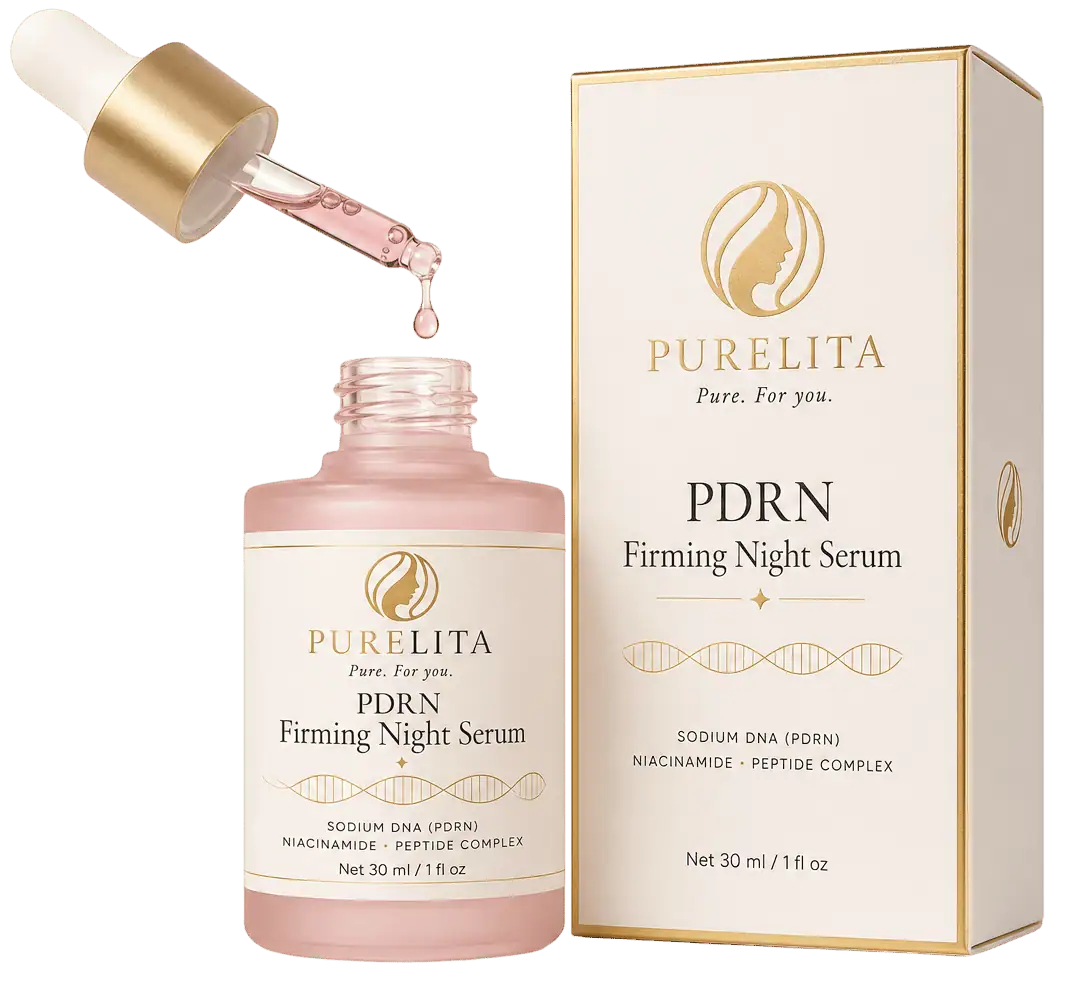
PDRN takes a different route entirely. Rather than forcing turnover, it binds to adenosine A2A receptors and signals the skin's own repair systems to activate — closer to how the body heals a wound than how retinol resurfaces skin. There's no forced shedding, which is why PDRN typically has a much gentler adjustment period than retinol.
Side-by-Side Comparison
| Retinol | PDRN | |
|---|---|---|
| Mechanism | Accelerated cell turnover | Tissue repair signaling |
| Adjustment period | Often 2–4 weeks of purging/irritation | Minimal to none |
| Sun sensitivity | Increases significantly — SPF essential | No meaningful increase |
| Pregnancy-safe | No — avoid during pregnancy | Considered lower-risk, consult your doctor |
| Best for | Texture, fine lines, established signs of aging | Prevention, firmness, barrier support |
This is not medical advice. Retinol use during pregnancy is specifically flagged by dermatology guidance including the American Academy of Dermatology as something to avoid — always check with your doctor before introducing any active ingredient during pregnancy or while breastfeeding.
Can You Use Both Together
Yes, and it's becoming a common pairing. Because PDRN doesn't exfoliate or increase sun sensitivity, it can be layered with retinol without the two competing — some routines use PDRN serum in the morning for barrier support and retinol at night for active renewal. If you're new to both, introduce one at a time so you can track how your skin responds.
Which One Should You Start With
If you're new to actives, have sensitive skin, or want a gentler entry into anti-aging skincare, PDRN is the lower-risk starting point. If you already tolerate actives well and are targeting more established fine lines or texture concerns, retinol remains the more clinically proven option for those specific goals. They're not direct substitutes for each other — think of PDRN as prevention and support, retinol as active correction.
Frequently Asked Questions
Is PDRN gentler than retinol?
Yes, generally. PDRN works through repair signaling rather than forced cell turnover, so it typically causes far less irritation and has little to no adjustment period compared to retinol.
Can I use PDRN and retinol on the same day?
Many routines use PDRN in the morning and retinol at night, which avoids any direct interaction. Introduce them one at a time if you're new to either.
Does PDRN cause purging like retinol does?
No — purging is specifically tied to accelerated cell turnover, which is retinol's mechanism, not PDRN's. PDRN does not typically cause a purging phase.
Which is better for firming skin, PDRN or retinol?
Both support firmness through different routes — retinol via collagen stimulation as a byproduct of renewal, PDRN via direct tissue-repair signaling. For established firmness concerns, retinol has more clinical history; for prevention and gentle support, PDRN is the better fit.
The Bottom Line
PDRN and retinol aren't competing for the same job. Retinol accelerates renewal and comes with a real adjustment period; PDRN supports repair with minimal irritation. If your skin already tolerates actives well and you're targeting specific aging concerns, retinol remains the more established choice. If you want a gentler, preventative option — or want to add firming support without disrupting a sensitive routine — PDRN is the lower-risk place to start.