

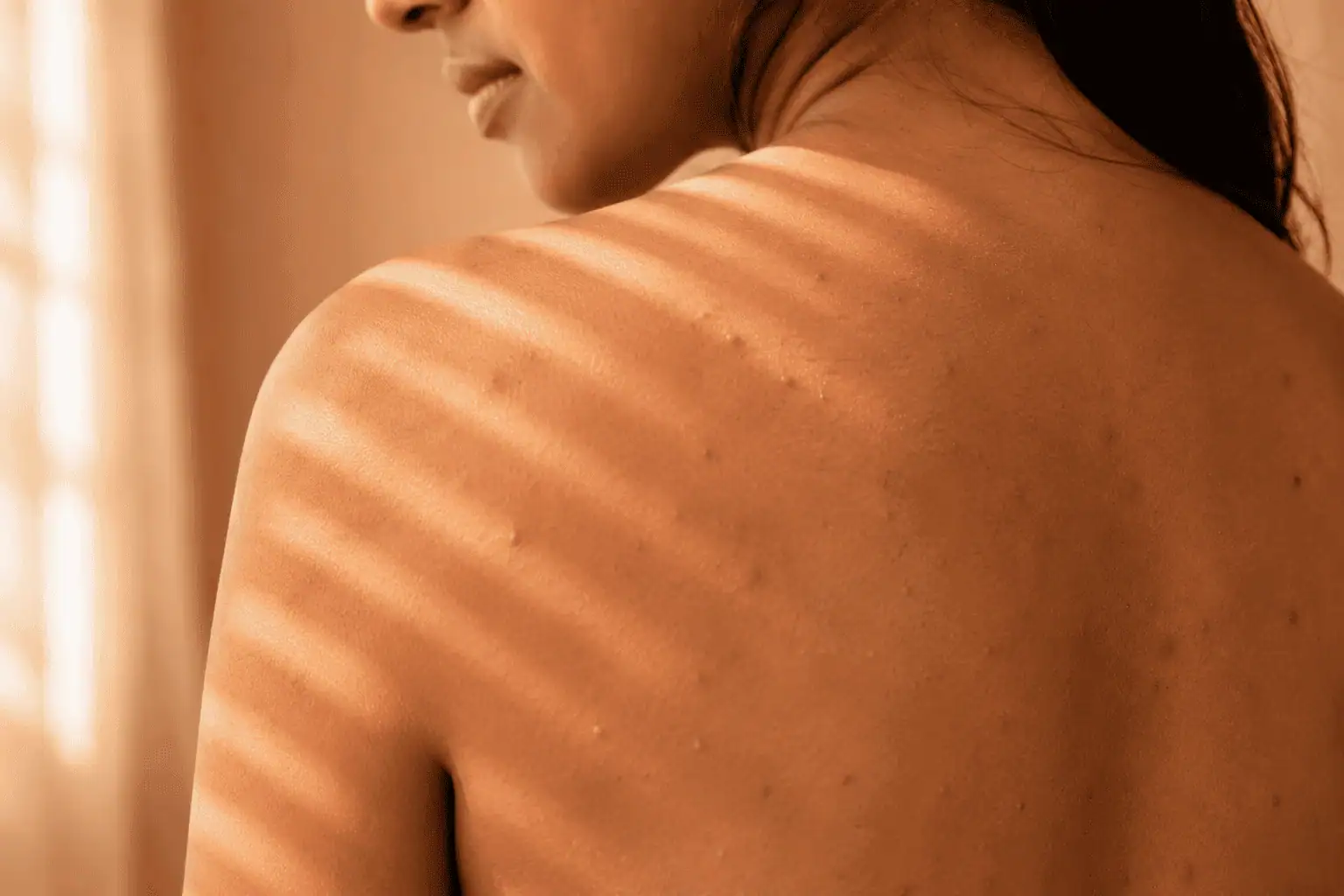

Back acne, often called "bacne," has a simple cause. The skin on your back has larger pores, thicker skin, and more oil glands than your face. On top of that, clothing covers it most of the day, trapping sweat and causing friction. So excess oil, trapped sweat, dead skin cells, and constant rubbing pile up. Together, they create an ideal environment for clogged pores and breakouts.
Facial acne is easy to see and treat throughout the day. Back acne, by contrast, develops where you can't easily reach or monitor it. As a result, it's easy to aggravate without realizing. Meanwhile, gym habits, fabric choices, and even your laundry detergent can all play a role.
So this article breaks down exactly why back acne forms. It also explains how it differs from facial acne. Then it covers what actually works to treat and prevent it. That includes which breakouts are realistic candidates for hydrocolloid patches.
Why does back acne happen?
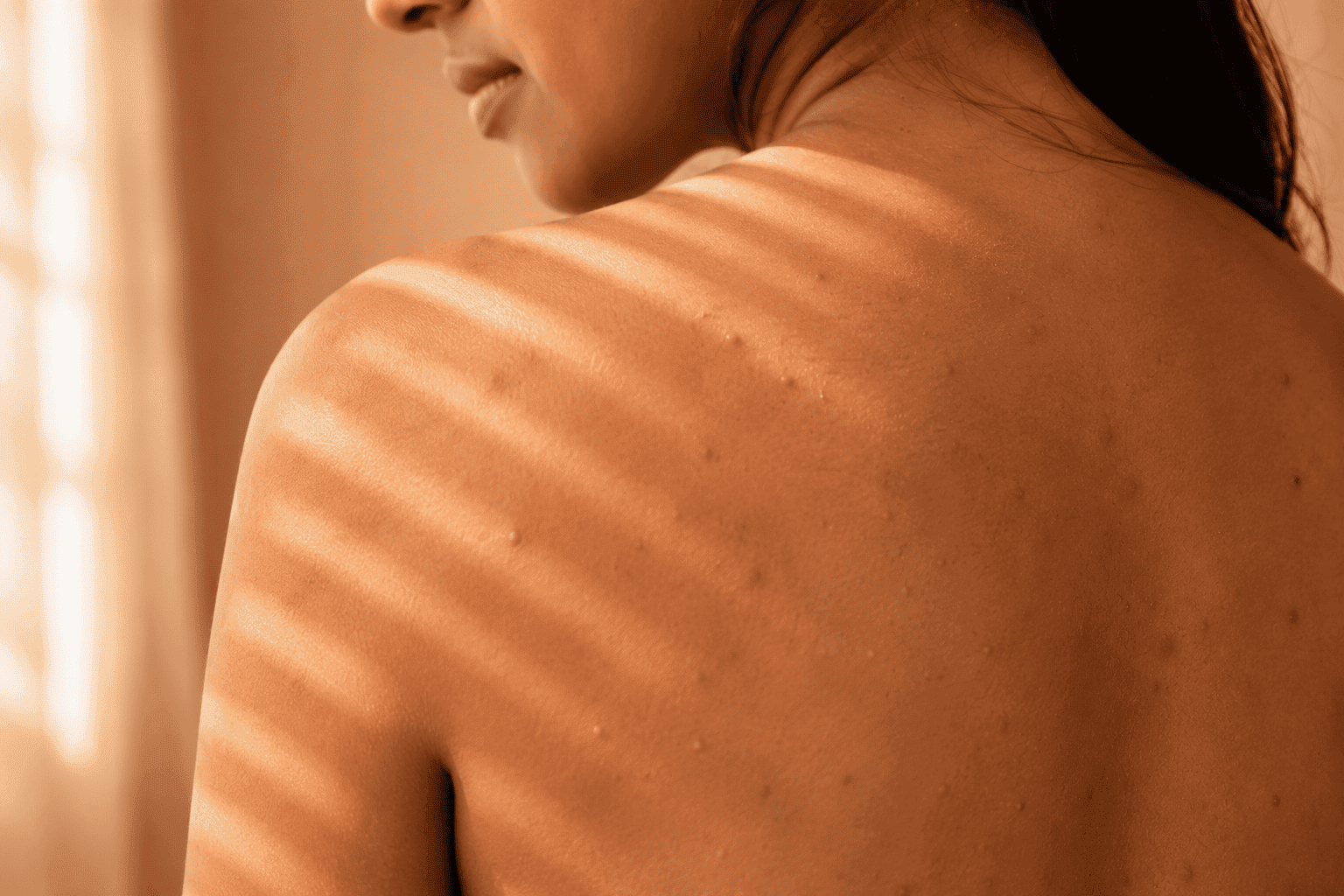
Back acne forms through the same basic process as facial acne. First, a hair follicle clogs with oil and dead skin cells. Then bacteria multiply inside it. Finally, the area becomes inflamed. However, there's one key difference. Your back has more, and larger, oil glands than most of your body. So it naturally produces more oil that can clog pores.
The back is also covered by clothing most of the day. In turn, that traps sweat, heat, and oil against the skin instead of letting it evaporate. Unfortunately, this warm, moist environment is exactly what acne-causing bacteria love. Then add friction from waistbands, bra straps, or backpacks. The result is repeated irritation in the same spots.
Hormonal fluctuations play a role too. During puberty, menstrual cycles, or high stress, oil production rises across the body, including the back. That's why bacne often flares alongside facial breakouts in the same windows. Even so, the two areas respond somewhat differently to treatment.
How is back acne different from facial acne?
Back skin is considerably thicker than facial skin. Because of that, topical treatments often need to be stronger or more consistent to penetrate. It's also why back lesions can feel firmer and more deeply rooted. As a result, they're more prone to dark marks or scars if picked at or left untreated.
In certain zones, the back also has denser, larger hair follicles. Combined with constant clothing cover, that invites a lookalike condition: folliculitis. Unlike acne, folliculitis is inflammation or infection of the hair follicle. Sometimes it's from bacteria; sometimes from yeast (Malassezia). Typically, it shows up as uniform, itchy, small bumps. By contrast, acne mixes blackheads, whiteheads, and deeper cysts.
Because you can't easily see your own back, breakouts there are often found late. So they're treated less consistently than facial acne. In turn, they can become more inflamed before you intervene.
What triggers and worsens back acne?
Sweat itself doesn't directly cause acne. However, sweat plus tight clothing and delayed showering creates the humid environment that does. This is especially true after workouts. Then sweat mixes with body oil and gym-clothes friction, and it sits against the skin for a long time.
Friction is another trigger. Backpacks, sports gear, tight straps, and even leaning on chair backs can all cause acne mechanica. In this case, repeated rubbing and heat irritate the follicle, independent of oil. That's why bacne often clusters in a backpack-strap pattern or along a bra line.
A few residues can clog pores over time too. For example, laundry detergent, fabric softener, and heavy lotions or sunscreens left on the back. This is worse with synthetic fabrics, since they trap heat instead of allowing airflow.
Key insight: Back acne is rarely about hygiene. Instead, it's about trapped sweat, friction, and oil from clothing and gear sitting against thick, oil-gland-dense skin for hours.
How to treat and prevent back acne
Letting sweat and oil sit on your back after a workout gives bacteria more time to multiply in clogged follicles. Rinsing off promptly, even with just water if a full shower isn't possible, reduces this window significantly.
These ingredients help exfoliate inside the follicle and reduce acne-causing bacteria. Letting the wash sit on the skin for a minute or two before rinsing improves its effectiveness compared to a quick rinse.
Cotton and technical wicking fabrics allow sweat to evaporate rather than stay trapped against the skin, unlike heavy synthetic blends. This is particularly important for workout clothes and backpack straps that sit against the same area repeatedly.
Avoid sitting in damp workout gear, especially after the gym or a long commute. The longer wet fabric stays against your skin, the longer your follicles are exposed to a trapped, bacteria-friendly environment.
If you use body lotion or sunscreen, choose non-comedogenic formulas labeled as such, since thick oil-based products can contribute to clogged pores in already oil-prone skin.
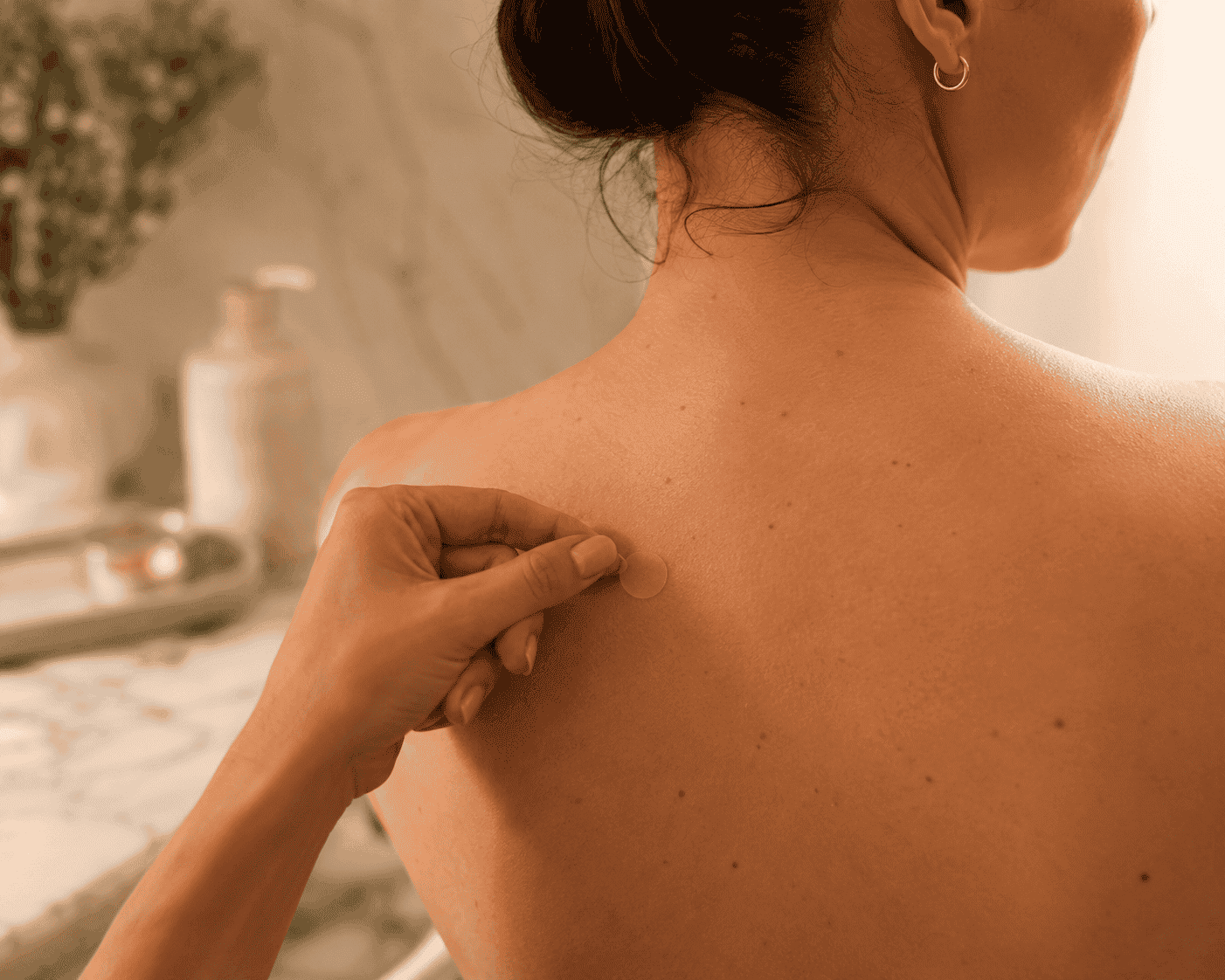
For breakouts on the upper back, shoulders, or any area you can reach, hydrocolloid patches help absorb fluid from open or popped lesions and create a protective barrier that reduces picking and friction from clothing.
Where do hydrocolloid patches fit into a bacne routine?
For back acne, hydrocolloid patches are most useful once a blemish is open, oozing, or picked at. In that case, the patch absorbs fluid and creates a moist healing environment. In turn, that supports the skin's barrier repair. Meanwhile, it shields the spot from bra straps, backpacks, and clothing that would otherwise re-irritate it all day.
The main limitation is reach and visibility. Patches work best on the upper back, shoulders, and lower back. There, you or a helper can see and access the spot cleanly. For acne across the hard-to-reach mid-back, lean on the habits above instead — body wash, fabric, and shower timing. Then reserve patches for the spots you can realistically treat.
As with facial patches, apply them to clean, dry skin. Also, avoid layering them over thick lotion or sunscreen residue, since that blocks proper adhesion.
When should you see a dermatologist for back acne?
Suppose washes, fabric changes, and prompt post-sweat showering haven't helped after several weeks. Then it's worth seeing a dermatologist. After all, persistent or worsening breakouts often respond better to prescription options. These include topical retinoids, oral antibiotics, or other systemic treatments.
Seek care sooner in a couple of cases. First, if you notice large, painful, deep cysts or nodules. These scar more easily and rarely clear with topicals alone. Second, if breakouts itch intensely and look like uniform small bumps. In that case, a dermatologist can check whether it's actually folliculitis, which needs a different approach.
Sudden, severe flares may warrant a broader hormonal evaluation. This is especially true alongside other symptoms, like irregular periods, excess hair growth, or rapid weight changes. Either way, a dermatologist or your primary care provider can help coordinate it.
Frequently Asked Questions
Is back acne caused by poor hygiene?
No. Back acne is mainly caused by trapped sweat, oil, and friction from clothing, not lack of washing. Over-washing or scrubbing too hard can actually irritate the skin further and worsen breakouts.
Can hydrocolloid patches be used on the back?
Yes, on reachable spots like the upper back and shoulders. They work best on open or popped blemishes, absorbing fluid and shielding the area from friction caused by clothing, straps, or backpacks throughout the day.
Why does my back break out more after the gym?
Sweat mixed with tight workout clothing traps heat and moisture against the skin, creating an environment where acne-causing bacteria thrive. Showering soon after exercising and wearing moisture-wicking fabric significantly reduces this risk.
Is back acne the same condition as folliculitis?
Not always. Folliculitis is inflammation or infection of the hair follicle and often looks like uniform, itchy bumps, while acne involves blackheads, whiteheads, and deeper cysts. A dermatologist can distinguish between the two if you're unsure.
What ingredients help treat back acne?
Salicylic acid and benzoyl peroxide in a body wash are the most accessible options, helping exfoliate clogged follicles and reduce bacteria. Letting the product sit on skin for a minute before rinsing improves results.
Does laundry detergent cause back acne?
Detergent and fabric softener residue can sometimes irritate skin or clog pores, especially with heavy synthetic fabrics. Switching to a fragrance-free detergent and breathable fabric can help if you suspect this is a contributing factor.
Can backpacks cause acne on the back?
Yes. Constant friction and trapped heat from backpack straps can trigger a type of breakout called acne mechanica. Taking breaks from heavy bags and choosing breathable straps can reduce this specific trigger.
When should I see a dermatologist about back acne?
See a dermatologist if over-the-counter treatments haven't helped after several weeks, or if you notice large painful cysts, intense itching, or sudden severe flares. These often need prescription treatment to prevent scarring.
Final Advice
Back acne responds well to consistent habits. In particular, prompt post-sweat showers, breathable fabrics, and a regular salicylic acid or benzoyl peroxide wash. Do be patient, though. Back skin is thicker, so it may take longer to respond than facial skin. Meanwhile, use hydrocolloid patches on reachable spots to protect healing skin from friction.
This article is for informational purposes and reflects general dermatological consensus; consult a board-certified dermatologist for diagnosis and treatment of persistent or severe acne.