

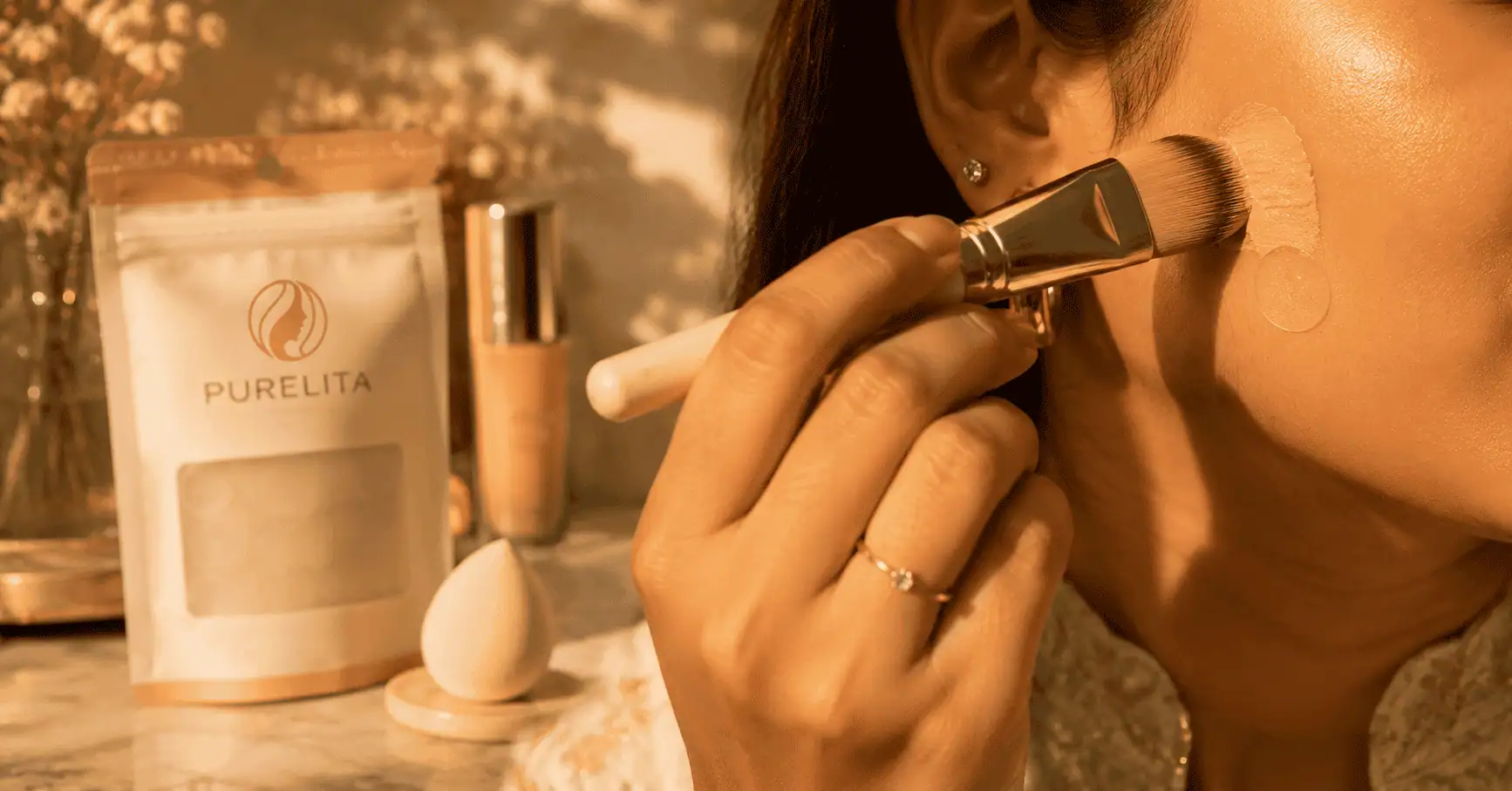

The question comes up constantly: can you wear a pimple patch under makeup? The answer is yes — but with conditions. The wrong technique lifts the patch, ruins your foundation, and gives you the worst of both worlds: a visible lump under your makeup and a pimple that hasn't healed. Applied correctly, pimple patches under makeup stay completely invisible all day.

The right technique keeps the patch adhered all day, foundation sitting smoothly over it, and the pimple healing underneath without interruption. Here is exactly how to do it.
Pimple Patches Under Makeup: Which Ones Work
Not all patches are equally makeup-compatible. The key variable is thickness and transparency:
- Ultra-thin clear patches — designed specifically for daytime wear. Sit almost flush with the skin, minimal visible edge. Foundation applies more smoothly.
- Standard thickness patches — still workable under makeup with the right technique. May show a slight raised edge in certain lighting.
- Night/thick patches — too thick for comfortable daytime makeup wear. The raised edge creates a visible bump that even full-coverage foundation can't disguise.
Purelita's precision-beveled patches are designed for day wear — the tapered edge reduces the visible raised border that makes patches obvious under foundation.
Step-by-Step: Applying Makeup Over a Patch
How to Make It Last All Day in Pakistan's Climate
Heat and humidity are the enemy of both patch adhesion and makeup wear. Several strategies help:
- Setting spray after makeup — a light mist of setting spray locks both the makeup and patch edge in place. Let it fully dry before touching your face.
- Avoid touching the area — every touch transfers oil from your fingers to the patch edge, lifting it. If you need to blot oil on your face, blot around the patched area with blotting paper.
- Press the edge back down if it lifts — if you feel an edge starting to lift, press firmly with a clean finger for 10–15 seconds. The body heat re-activates the adhesive enough to re-seal in many cases.
- Don't apply sunscreen over the patch midday — SPF reapplication directly over the patch area compromises adhesion. Apply to surrounding areas only.
If you're going to a formal event and need the patch to be completely invisible, apply it the night before and remove it in the morning. By morning, the pimple will be significantly reduced — and a flat, partially-healed pimple is far easier to cover with makeup than a raised, inflamed one.
Removing the Patch With Makeup On
At the end of the day, remove the patch before your makeup, not after. Wet a cotton pad with micellar water and hold it against the patch for 30 seconds. This softens the adhesive without pulling aggressively at the skin. Then peel from one corner, slowly and parallel to the skin surface. The makeup on and around the patch will come away with it — that's fine, you're about to cleanse anyway.
Never peel the patch away quickly or perpendicular to the skin while makeup is on top of it. The combined resistance of dried foundation and adhesive can create enough force to pull at a thin layer of skin.
Frequently Asked Questions
Does wearing makeup over a pimple patch reduce its effectiveness?
Slightly — makeup products applied over the patch can reduce the seal quality marginally, but the absorption mechanism (which happens from the pimple side, not the outside) continues. The key is not applying heavy, oily products directly on the patch surface before it's had time to adhere. Applied correctly, a daytime patch still absorbs meaningfully, just not as efficiently as an overnight patch on bare skin.
Can you see a pimple patch under foundation?
With a thin, clear patch and the stippling technique described above, the patch is very difficult to detect. The beveled edge is the critical factor — a flat-edged patch has a sharp perimeter that creates a visible ring under foundation. A beveled patch transitions gradually, making it nearly invisible under a medium-coverage foundation when applied correctly.
Does foundation sink into the patch and look cakey?
The hydrocolloid surface is slightly different in texture from skin, and heavy full-coverage foundations can sit differently on it. Use a medium-coverage formula and apply thin, stippled layers. Setting with powder prevents caking. If you've had the patch on all day and it's already absorbed some exudate (beginning to turn slightly white), the surface may be slightly raised — apply foundation even more lightly in that area.
Can I wear a patch under a dupatta or abaya without it lifting?
Yes — a well-adhered beveled patch will not lift from fabric friction in normal wear. The issue is not the fabric touching the patch surface, but moisture from sweating under covered areas. If you wear hijab in warm weather, press the patch edge very firmly during application and use a setting spray. The patch may show slightly more wear at the edges in high-sweat areas, but should hold through the day.
Should I apply a new patch after removing the makeup one?
If the pimple still needs treatment, yes — apply a fresh night patch to clean skin after your evening skincare routine. A daytime patch that has been worn for 8–10 hours under makeup will be at or near saturation. A fresh night patch gives you another full extraction cycle while you sleep.
What's the best foundation formula to use over a patch?
Medium-coverage liquid foundations with a natural or satin finish work best. Avoid very dewy foundations (too much slip, reduces patch edge adhesion) and matte full-coverage formulas (too thick, crease around the patch edge). A skin tint or BB cream over a patch is the easiest option for low-coverage days — the thin formula sits smoothly over the patch surface without edge-creasing.
Can I use concealer directly on the patch?
Yes — a creamy concealer applied with a flat brush and stippled over the patch works well for additional coverage. Use a shade that matches your skin exactly (not the usual one-shade-lighter trick) — a lighter concealer on an already-slightly-raised surface will highlight rather than conceal the patch. Set with powder.
Is it okay to apply blush or bronzer over a patched area?
Yes, but apply with a very light hand and a fluffy brush. The patch surface doesn't absorb powder pigment the same way skin does — the colour can sit more intensely on the patch than the surrounding skin, making the area look slightly different in certain lighting. A light dusting is better than building colour on the patch area directly.
The Bottom Line
Pimple patches and makeup are not mutually exclusive. With the right patch (thin, beveled), the right technique (stippling, not swiping), and the right setting (powder + setting spray), you can go to work, an event, or a family gathering with a patch healing your pimple underneath and no one the wiser. The pimple heals faster than it would uncovered, and the makeup applies more smoothly than it would over a raw, inflamed spot.
Medically reviewed guidance referenced from the American Academy of Dermatology and peer-reviewed research.